Appearance
Dark Light
Did You Know?
Conventional farmers use around 300 different pesticides to grow foods that are sold in supermarkets everyday.

Urban Gardening - 2026
It's been a tough growing season, with extreme weather events and a significant increase in input costs, particularly fertilizer and gas (due to the Iran war). Despite these challenges, I still find gardening deeply satisfying and therapeutic. I grow things as a hobby, but I can empathize with small-scale farmers and market gardeners who farm for a living during these uncertain times.
This year marks the 10-year anniversary at my current allotment garden plot!
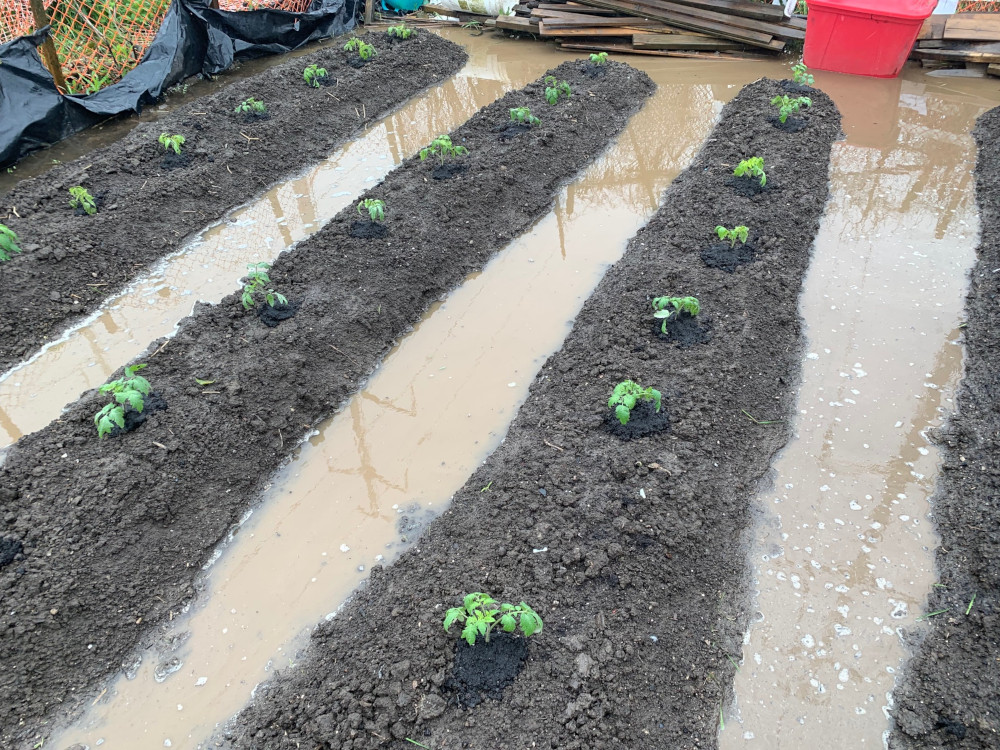
My allotment garden plot flooded. Torrential rain + clay soil is a gardener's nightmare. We had a day in May with over 50mm of rain within a few hours (almost the average amount for the ENTIRE month!) . It took 3 days for the soil to soak up the water, and another week before the ground was dry. Even with raised beds, I ended up losing 4 tomato seedlings (out of 22). Some of the other plots at the garden were completely submerged and looked like a small pond. This is anecdotal - based on my own experience over the past few years - but extreme weather now seems to be the norm rather than the exception.
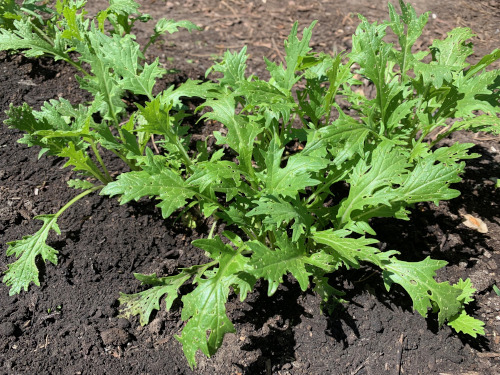
Mizuna. A Japanese green in the mustard family; it has a mild peppery taste similar to arugula. Often eaten raw as a salad green, it can also be blanched quickly, and is delicious with a bit of sesame oil and salt. It grows well in spring, but bolts (starts to flower) quickly in the heat of summer. Flea beetles seem to love it, which can be a problem if you don't want to use pesticides or have time to manually remove them from the leaves. I've never grown it before, and the seed packet that I got didn't contain many seeds, so I only had a few plants - only enough for a couple of meals. I did save some seeds from the plants, and will try to grow more next year.
How the Farming Works (according to Google)
EQUIPMENT:
INGREDIENTS:
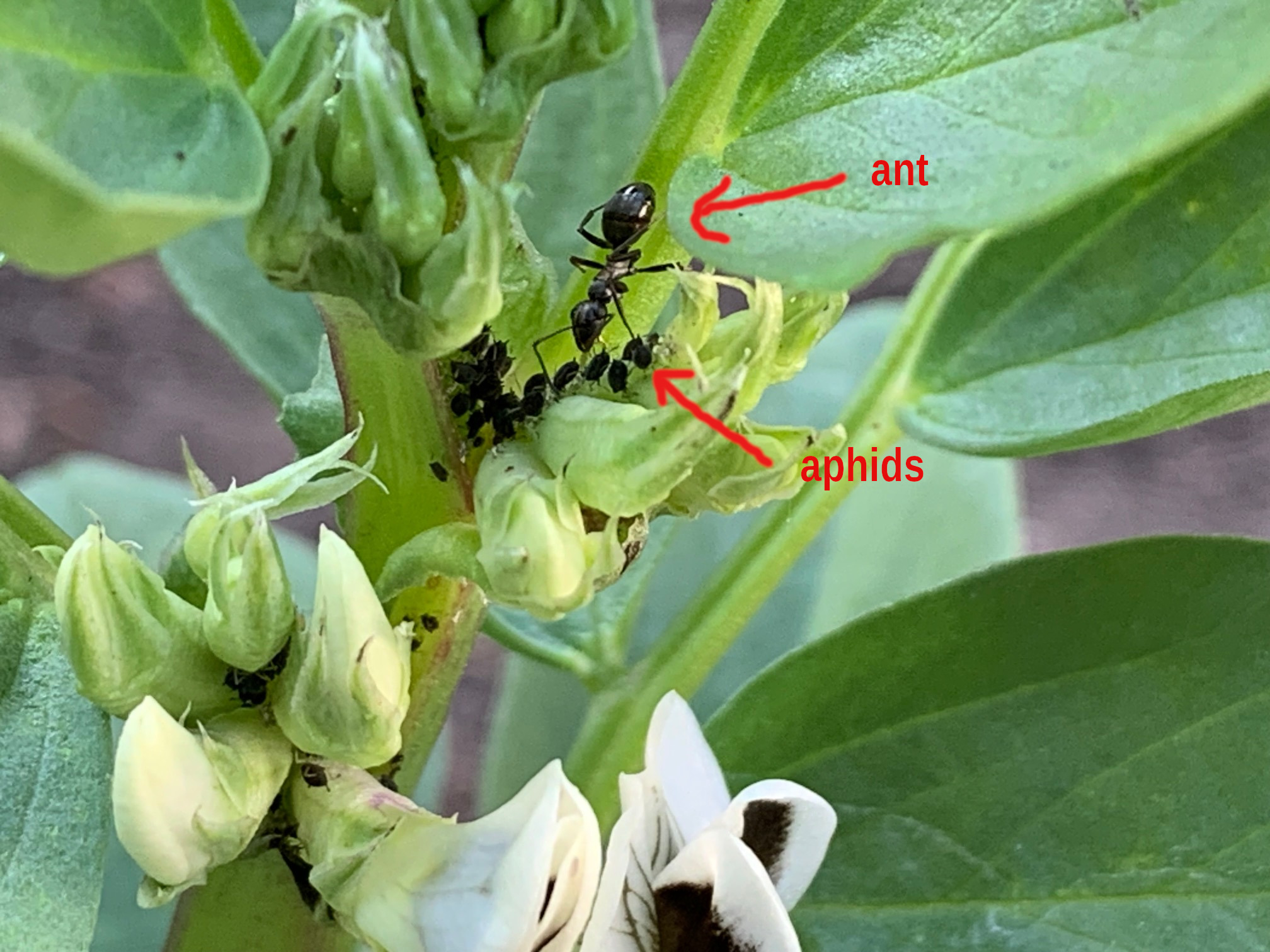
Ants "farm" aphids for food. The ants protect the aphids from predators, and in return, they get to eat the honeydew that the aphids secrete. I was aware of this, but I haven't seen this in person before this year. Some of my broad beans were infected with aphids, and I noticed that there were ants crawling all over the plants. It was kind of interesting to watch.
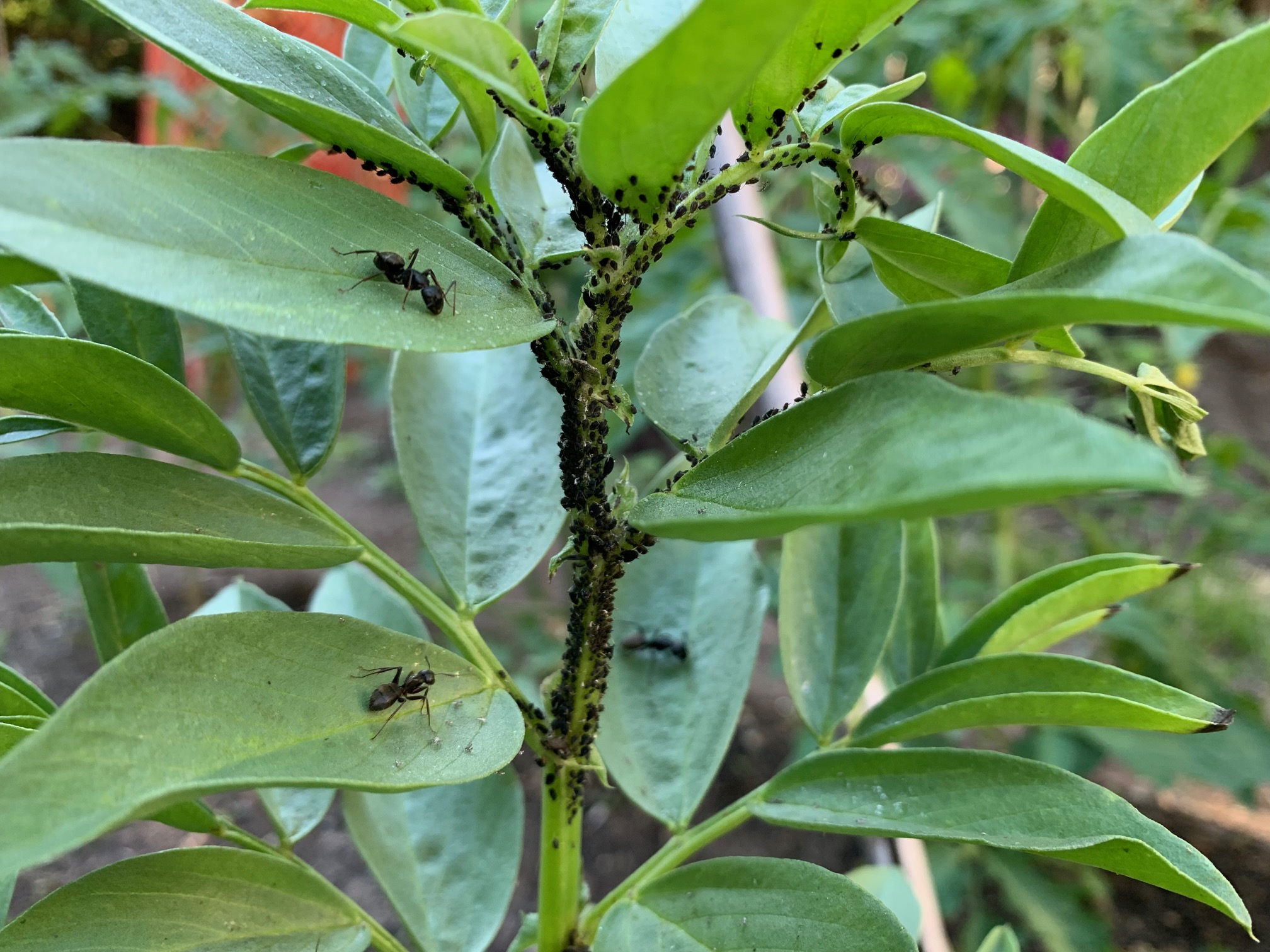
There were a lot of aphids! After a while, I got bored of watching the ants and aphids, so I took a few pictures and then sprayed them with water to knock them off. I made a home-made pesticide (minced garlic + chili pepper flakes + water) and sprayed the plants. That seemed to work and kept the aphids/ants under control.
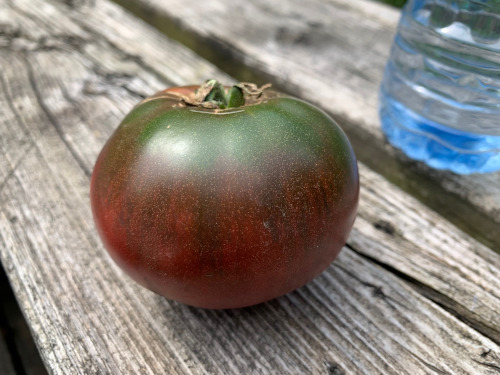
Black Krim tomato. A dark tomato variety from the Crimea region of Russia; it looks similar to Cherokee Purple tomatoes (my all-time favorite dark tomato variety). Sweet, juicy and slightly smoky, it's a great tomato for sandwiches or just eaten as is. Crack-resistant skin (compared to the Cherokee Purple), high-yielding and flavorful - I think the Black Krim might become a permanent resident in my garden. The plants can grow quite big/tall, so leave plenty of space for them to grow (3-4 feet part)
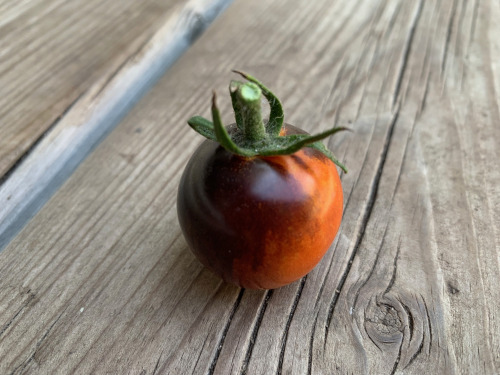
Indigo Rose tomato. Some other gardener grew this variety at the allotment garden last year, and the striking appearance caught my eye. He generously gave me a few to try. To be honest, I wasn't totally impressed with the flavor. It wasn't bad, but it was a bit bland. Anyway, I saved the seeds and tried growing one plant this year to see if I could improve on the flavor. It grew well - the plant had many clusters of ping-pong-ball-sized tomatoes. When unripe, the tomatoes are shiny purple-black. As it ripens, the color changes to a deep orange where there is no sun exposure. Flavor-wise, they were... okay. I think the flavor is better than last year's (maybe I'm biased 😊 ), but still not as good as the Black Krim or Cherokee Purple. I think it has good health benefits, though, as it is high in anthocyanin (an antioxidant -- the pigment that gives the purple color).
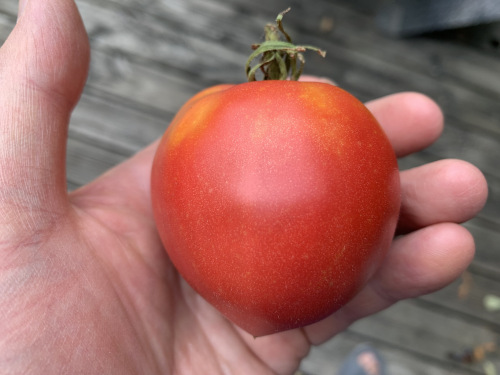
Aichi First tomato. Originally from the Aichi prefecture in Japan, this tomato has a characteristic pointy tip. Sweet, juicy and rich tomato flavor; the texture is firm with few seeds. This heirloom variety produces a good yield of medium-size fruits with crack-resistant skin. Can be eaten raw (preferred) or cooked - it stands up to cooking and doesn't lose its texture, unlike other varieties that turn into mush.
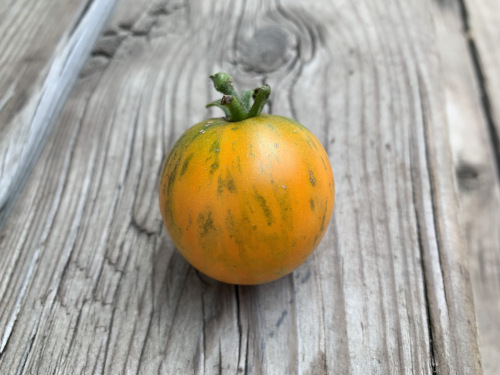
Apricot Zebra tomato. A firm-fleshed tomato with amazing flavor. The fruit is golf-ball-sized, with green-striped vivid orange skin. Best eaten fresh off the vine, as it tends to get a bit mealy when stored after a while. The seed company described it as 'prolific', but I only got a few fruits from the one plant I grew. The plant itself is quite vine-y, and in hindsight, I should have used more stakes to support it, and pruned it more aggressively. I will try growing it again next year, and hopefully get a better yield.
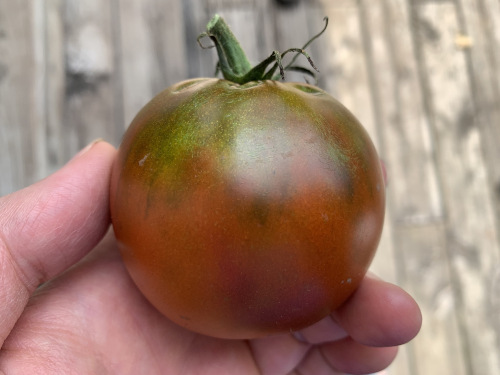
Brown Sugar tomato. A Russian heirloom variety with round, medium-size fruits. Juicy, rich and savory flavor; sweet, but not as sweet as its name suggests. The skin is reddish-brown with green shoulders; it's thin-skinned, but surprisingly crack-resistant, even after heavy rain. The plant produces a good yield, but tends to sprawl, so it needs to be staked and pruned. Another dark tomato variety to add to my list of favorites!
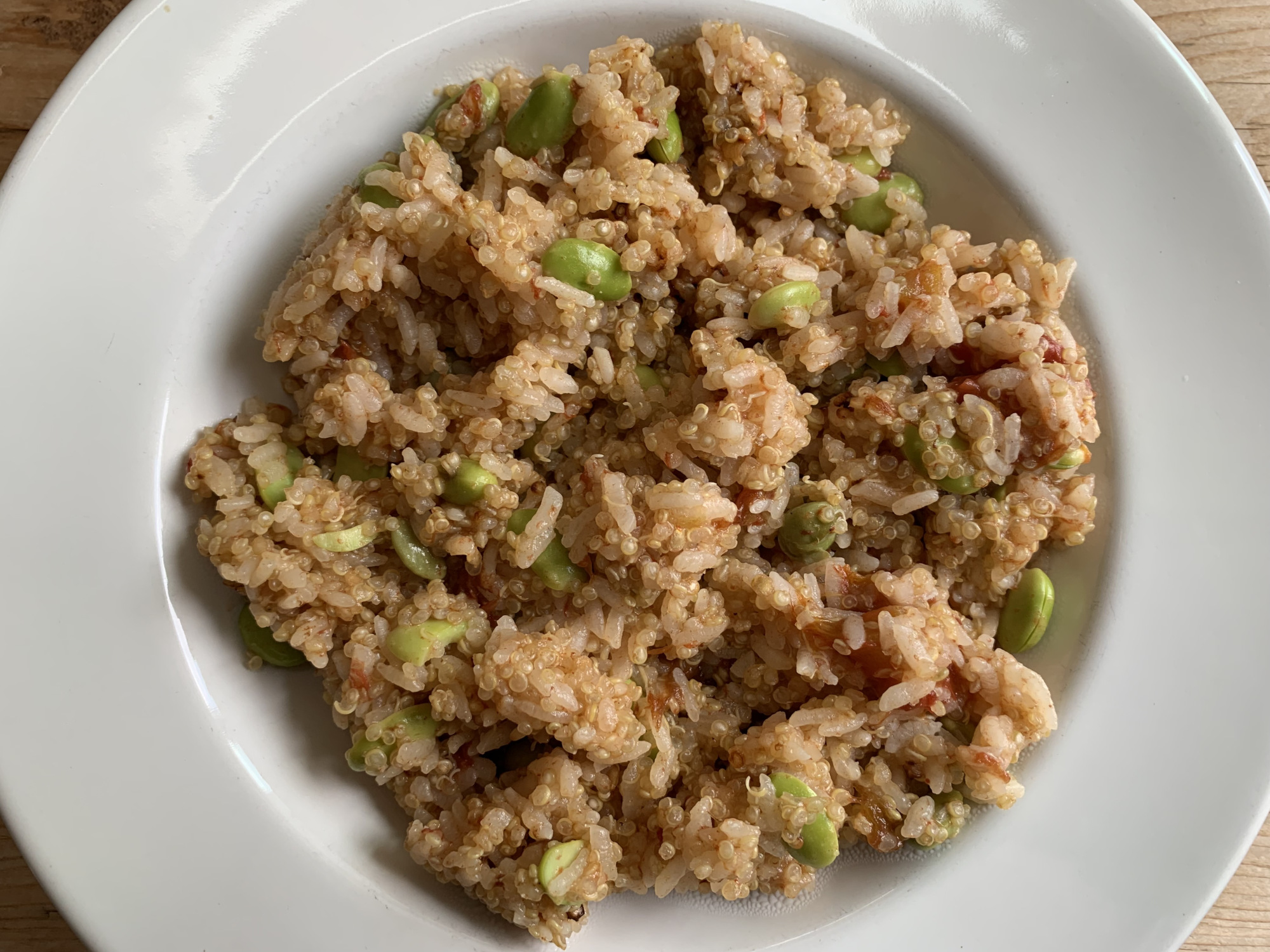
Tomato & Edamame Rice. This dish combines two of my favorite crops: tomatoes and soybeans (edamame). For me, a good, vine-ripened heirloom tomato is the defining taste of summer. It's a good way to use up some over-ripe tomatoes, and the edamame adds a nice texture and flavor. It's a simple and hearty dish that can be eaten as a main course or served as a side dish. The Brown Sugar and Aichi tomatoes work well for this recipe.
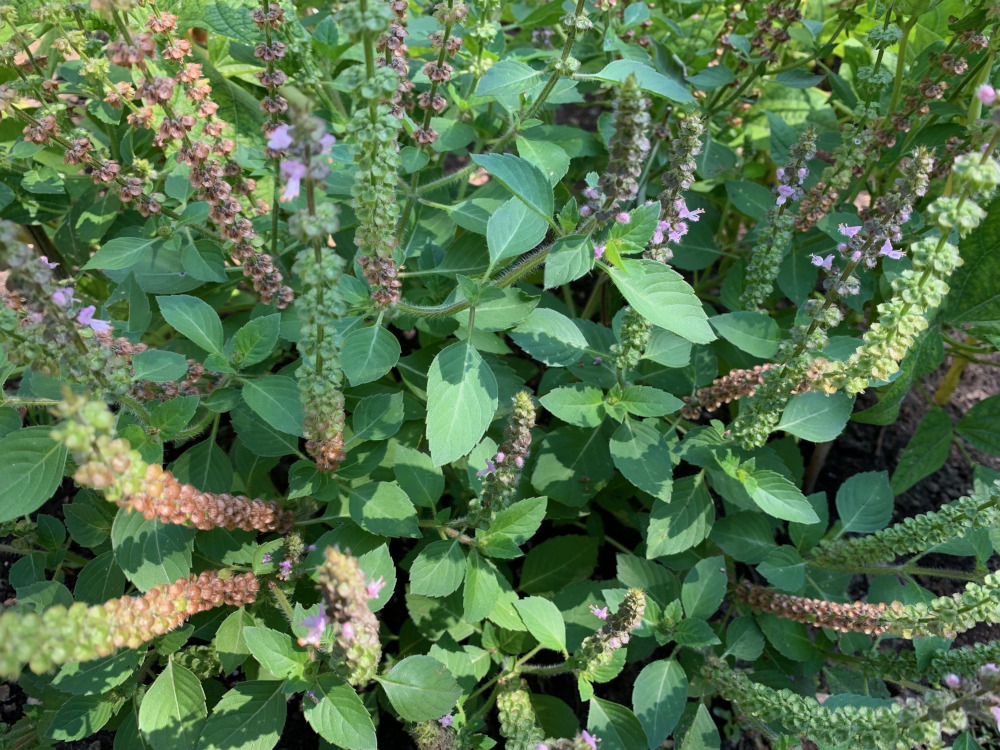
Holy Basil. I love the smell of holy basil, and it's my favorite herb to grow. The fragrant blue flowers are a magnet for pollinators. I use the leaves (fresh or dried) to steep tea. Aside from culinary uses, it also is an herbal remedy that helps the body manage physical and emotional stress by lowering and regulating cortisol (the stress hormone) levels in the body. Once the plant gets established, it's pretty low-maintenance and you can harvest well into the fall.
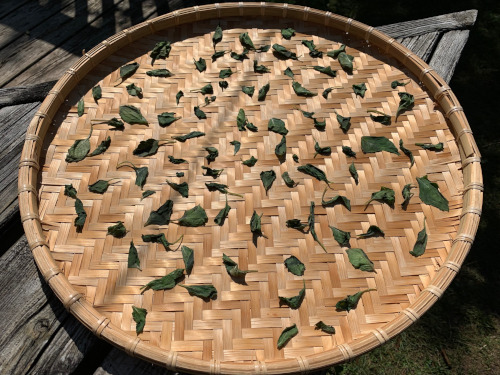
Holy basil drying in the sun. Before drying, briefly steaming the leaves for a few seconds helps to preserve the flavor, color and aroma.